Local SEO and organic SEO share technical foundations, but they serve different customer journeys. A customer searching “dentist near me” needs a nearby practice; someone searching “how dental implants work” needs information. Your strategy should reflect which type of demand produces valuable enquiries.
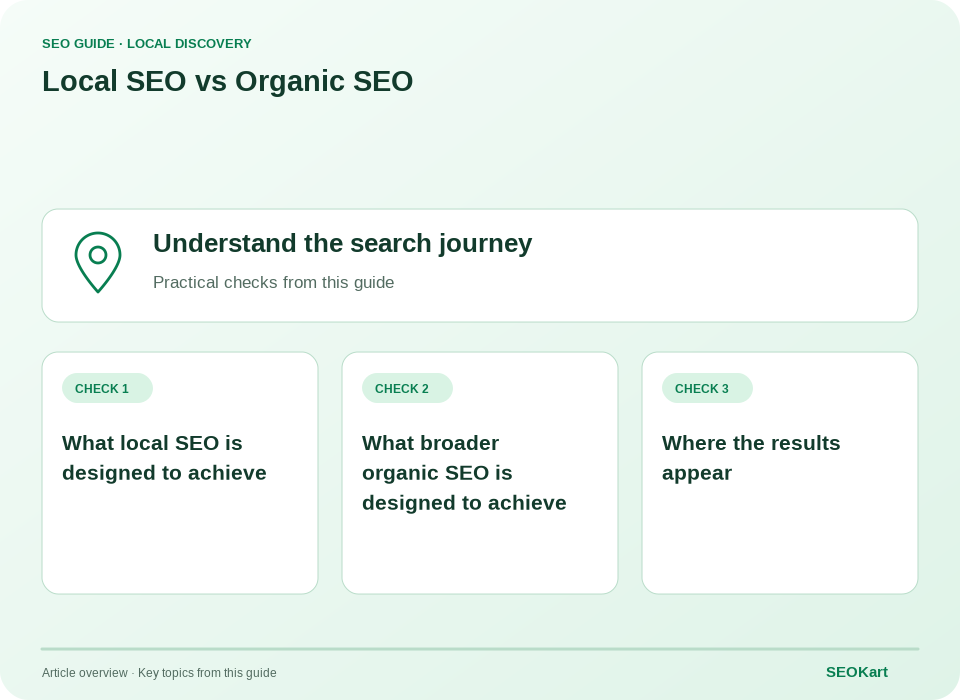
What local SEO is designed to achieve
Local SEO helps eligible businesses appear for searches with geographic intent, including Google Maps and local results. It combines accurate business information, a well-maintained Google Business Profile, service-area relevance, location-specific pages and genuine customer reviews. Proximity also affects local results and cannot be overridden by adding keywords.
What broader organic SEO is designed to achieve
Organic SEO improves a website’s relevance and accessibility for searches that do not necessarily require a nearby provider. It includes technical indexing, useful service and product pages, informative resources, internal linking and earning relevant references. National ecommerce stores, publishers and software businesses often depend heavily on this channel. For more detail on this related topic, see What Is Local SEO? How Nearby Customers Find Your Business.
Where the results appear
Local searches may show a map pack, business profiles and standard website listings. Broader informational or commercial searches often show organic listings and other search features. A company can appear in both: its profile can answer “accountant near me” while its website explains accounting services and pricing.
Choose based on the customer journey
A single-location clinic or restaurant should prioritise local discovery and conversion. A business selling nationally should focus on category, product and service intent. A company with several real branches may need both: distinct, useful location pages for each branch and strong central service pages. Avoid making near-identical city pages where there is no meaningful local presence or service distinction.
What to measure
For local SEO, review Google Business Profile interactions, direction requests where applicable, calls, qualified enquiries and local landing-page conversions. For organic SEO, review non-branded impressions, relevant query rankings, landing-page engagement and leads or sales. Do not judge success by rankings alone. For more detail on this related topic, see Local SEO Checklist for Small Businesses in India.
A practical 30-day starting plan
Week one: confirm indexing, tracking and business information. Week two: improve the highest-priority service page and profile completeness. Week three: add credible local evidence or a genuinely helpful resource. Week four: inspect Search Console queries and lead quality, then choose the next improvement.
How SEOKart can help
SEOKart can combine a local SEO campaign with technical SEO, content planning and relevant city-specific services. We prioritise customer intent rather than selling identical work to every business.