SEO progress depends on competition, website history, technical health and content. See a realistic milestone-based timeline and what to track.
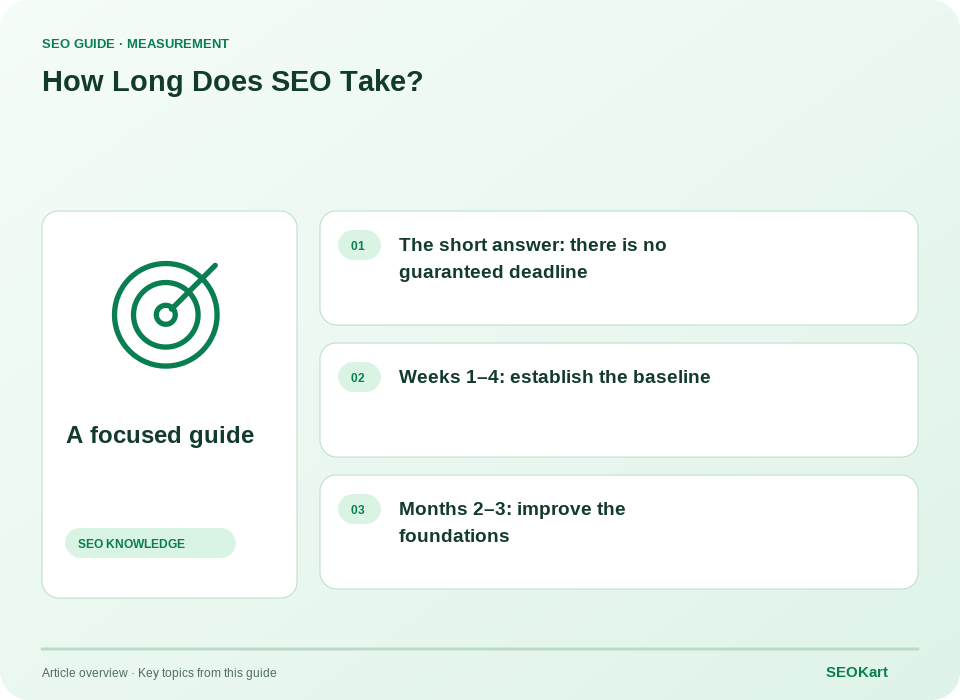
The short answer: there is no guaranteed deadline
Some technical fixes can be reflected in search systems quickly; meaningful organic growth often takes several months and can take longer in competitive markets. A three-to-six-month window is a planning assumption, not a promise of first-page rankings or leads. Google must discover, crawl, index and evaluate changes, while competitors continue improving their sites.
Weeks 1–4: establish the baseline
Audit index coverage, canonical URLs, robots rules, important landing pages, mobile usability and existing queries. Set up conversion tracking and separate branded from non-branded search. Prioritise high-value service pages before publishing large volumes of new content. The deliverable is a documented baseline and a ranked action plan. For more detail on this related topic, see SEO Results and Reporting: What Businesses Should Expect.
Months 2–3: improve the foundations
Fix technical obstacles, strengthen internal links, rewrite pages with unclear intent and publish supporting answers to customer questions. Monitor whether updated URLs are crawled and indexed. Rising impressions on relevant queries can be an early signal, but isolated position changes on one or two impressions are not meaningful evidence.
Months 4–6: evaluate traction
Review search queries and landing pages in comparable date windows. Look for sustained growth in relevant impressions, clicks and enquiries, not just a higher number of indexed URLs. Refine pages that attract impressions but few clicks and improve pages ranking below the first page when the intent match is strong.
Six months and beyond: compound what works
Competitive national, international and high-value B2B queries may require more sustained work. Expand successful content clusters, earn credible mentions and links, and improve conversion paths. If there is still little visibility, revisit targeting, site quality, technical signals and competitive positioning instead of blindly publishing more pages. For more detail on this related topic, see How Often Do Google Rankings Change? What to Monitor.
Factors that change the timeline
A new domain, a recent migration, frequent URL changes, weak topical relevance, high competition or crawl and indexing problems can slow progress. Existing brand demand, well-matched service pages and sound technical foundations may shorten the path to useful results. Each market and keyword set behaves differently.
How to judge your SEO agency
Ask for a monthly record of completed improvements, target-page changes, indexing status, query trends and enquiries. Be cautious of guaranteed ranking dates. SEOKart’s SEO audits and India SEO packages can be scoped around measurable business priorities; discuss your goals.