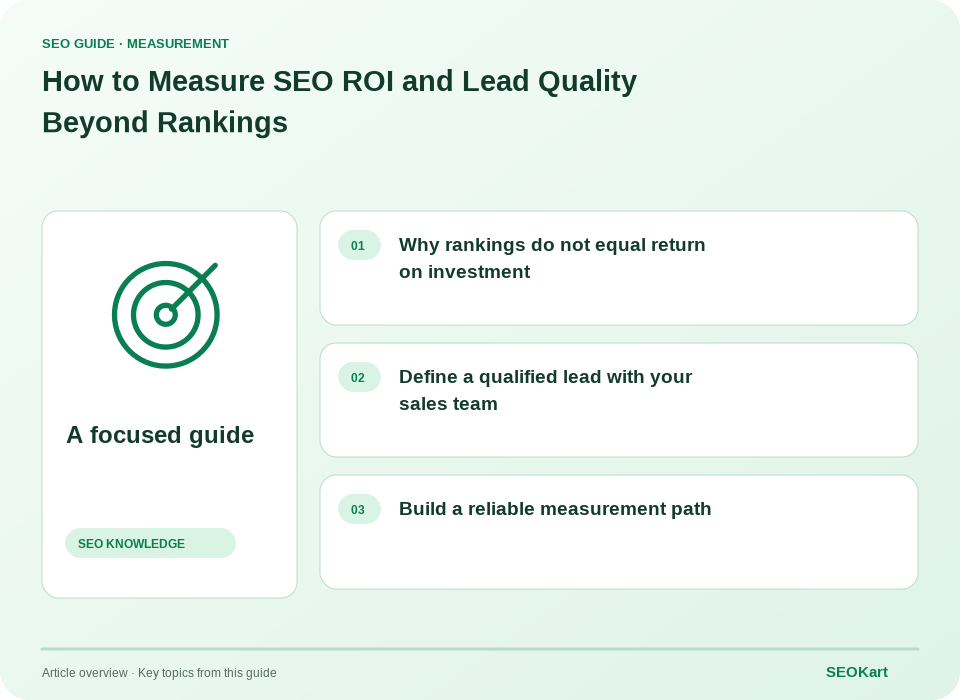
Track qualified organic leads, revenue contribution and SEO costs using practical conversion and CRM measurement methods.
Why rankings do not equal return on investment
A first-page position for a broad informational query may bring readers who never become customers. A lower-volume service query can generate valuable conversations. Measuring SEO value requires linking organic search visits to meaningful actions and, where possible, actual sales outcomes.
Define a qualified lead with your sales team
Document the criteria that make an enquiry useful: required service, serviceable location, realistic budget, purchase timeline and valid contact details. Distinguish enquiries from qualified leads and customers. Without a shared definition, reports may reward form submissions that sales teams cannot use. For more detail on this related topic, see Google Analytics 4 for Business Owners: What to Measure.
Build a reliable measurement path
Use analytics events for calls, forms and booking actions, with appropriate consent and privacy controls. Preserve landing-page and acquisition information when a lead enters the CRM. Where feasible, record which leads become opportunities or sales; avoid treating every button click as a completed enquiry.
Calculate return with the right costs
For a simple view, compare attributable gross profit or contribution from SEO-acquired customers with content, development, agency and tooling costs over an appropriate period. Long sales cycles mean current spending may produce revenue later. Avoid presenting last-click attribution as a complete picture of every marketing influence. For more detail on this related topic, see SEO Results and Reporting: What Businesses Should Expect.
Investigate the pages that attract buyers
Group leads by landing page, service category and location. Review the search intent behind high-converting pages and identify pages drawing irrelevant traffic. Improving calls to action, qualification questions and service clarity can raise lead quality without requiring more sessions.
Make reporting actionable
A monthly review should show relevant organic landing pages, qualified enquiries, sales feedback, completed improvements and next experiments. Pair ongoing SEO with clear measurement responsibilities and a periodic technical and content audit where needed.