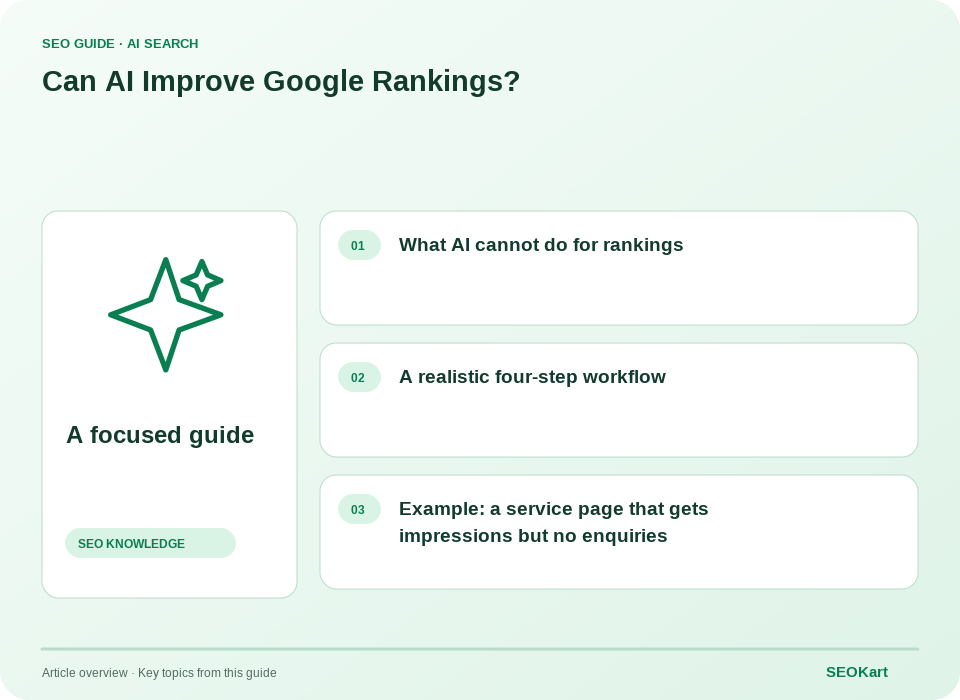
AI can help improve the work behind SEO, but it cannot buy or guarantee a better position in Google. The practical value is speed: analysing search queries, spotting missing information and organising improvements. The outcome still depends on whether the finished website is useful, accessible and competitive.
1. Understand the questions customers ask
Start with real Search Console queries, customer emails, sales conversations and competitor page themes. AI can group similar questions into topics, but a human should decide which questions deserve a dedicated page and which belong together. For a local service business, pricing, service areas and eligibility may matter more than generic definitions.
2. Improve existing pages before creating more
Compare the page against its intended search purpose. Is the service clearly described? Are deliverables, limitations, process and next steps visible? AI can help flag missing sections; the business must supply accurate pricing, capabilities and examples. Adding paragraphs merely to increase word count is not an improvement. For more detail on this related topic, see AI SEO Tools: What to Use and What to Check.
3. Support technical reviews
AI can help interpret crawl exports, title duplication reports, internal-link lists and structured data errors. However, tools can misunderstand a website's actual rendering, canonical setup or JavaScript behaviour. Validate every proposed fix in the source, browser and server response before deploying.
What AI cannot do for rankings
It cannot guarantee a first-page position, create genuine customer reviews, invent expertise, replace a functioning website or make an unindexed page rank. It also cannot reliably judge whether a claim is true without evidence. Automatically producing dozens of similar city pages may make the website less helpful, not more. For more detail on this related topic, see Google Rankings Dropped? A Practical Diagnosis Guide.
A realistic four-step workflow
- Baseline: record indexed pages, impressions, clicks, search queries and qualified enquiries.
- Prioritise: select pages with clear commercial value and demonstrable content or technical gaps.
- Improve: use AI for analysis and drafts, then add verified, specific information from the business.
- Measure: compare page-level outcomes over several weeks, accounting for seasonality and indexing delays.
Example: a service page that gets impressions but no enquiries
Suppose a service page mentions “SEO packages” repeatedly but never explains what the customer receives. A useful improvement is a comparison of deliverables, reporting frequency, exclusions, onboarding and expected milestones. AI may help structure that comparison, but the agency must confirm every promise. The goal is a more useful page, not a machine-generated keyword count.
When to seek expert help
If a site has many indexed pages but almost no impressions, review query demand, content differentiation, technical eligibility and authority together. Our SEO audit services assess the foundation; AI SEO services address content and AI-search readiness as part of a broader plan.