Small business SEO works best when it targets a manageable set of services, locations and customer questions. You do not need hundreds of blog posts; you need useful pages that search engines can access and prospective customers can trust.
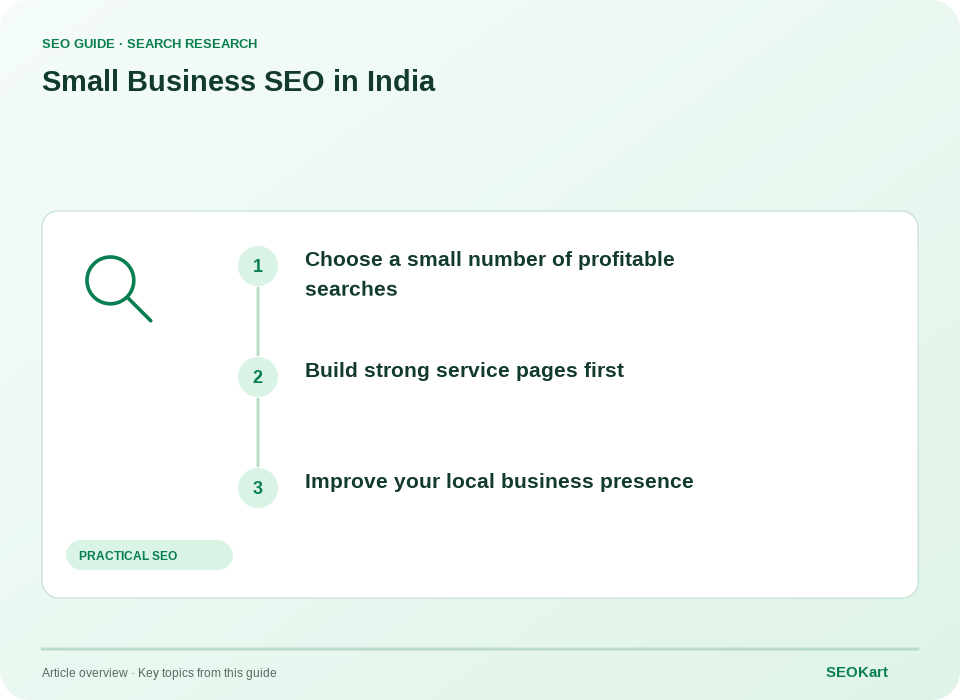
Choose a small number of profitable searches
List the services that generate the best enquiries, then note how customers describe them. Separate informational searches from queries that suggest someone is ready to call, book or request a quote. A neighbourhood repair company may benefit more from clear service and locality pages than broad articles about the history of its industry.
Build strong service pages first
Give each important service a page with a clear description, who it is for, relevant examples, service coverage, pricing approach where appropriate and an easy contact path. Use a single descriptive H1 and headings that answer practical questions. Do not clone pages for nearby cities unless each page provides genuine location-specific information. For more detail on this related topic, see Local SEO for Small Businesses: A Practical Growth Plan.
Improve your local business presence
If eligible, maintain an accurate Google Business Profile with correct category, hours, contact details and useful photos. Keep the same business information on your website and relevant directories. Encourage genuine reviews without incentives or fabricated feedback. Our local SEO services and Google Maps guide cover the essentials.
Fix technical problems that affect customers
Check whether your main pages are indexable, load reasonably on mobile and have working navigation, forms and telephone links. Resolve broken links, accidental noindex settings, confusing redirects and duplicate canonical URLs before paying for more content. Use technical SEO basics as a checklist. For more detail on this related topic, see AI SEO for Small Businesses: A Practical Starting Plan.
Publish supporting content with a purpose
Answer real pre-purchase questions: how a service works, what affects costs, what to prepare and how to compare options. Link each guide to the appropriate service page using natural descriptive text. Avoid keyword stuffing and repetitive generic posts. One helpful comparison may produce better enquiries than ten low-value articles.
Measure leads and expand deliberately
Set up Search Console and suitable conversion measurement, then track enquiries, qualified calls and landing pages that attract them. Review results monthly and add new locations or services only when there is a credible business case. Explore SEO services and SEO budget planning for prioritisation.