AI-generated content is not automatically good or bad for SEO. The deciding question is whether the published page genuinely helps the reader. A fluent draft can still contain inaccurate claims, invented examples or repeated advice that adds nothing new.
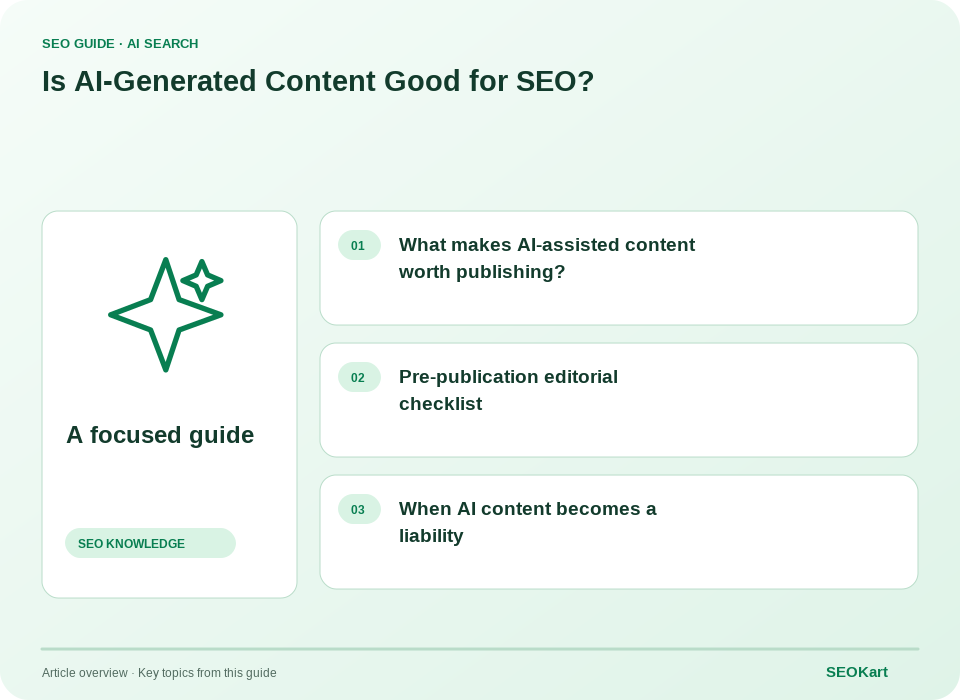
What makes AI-assisted content worth publishing?
Start with the audience's decision. A business owner searching for SEO pricing needs clear deliverables, contract terms and realistic expectations. A reader researching technical SEO needs explanations and steps that can be checked. A page should provide information suited to its purpose rather than simply include a target phrase.
Accuracy and verification
Check statistics, dates, legal claims, product features, quotes and references against reliable primary sources. Remove any citation you cannot verify. Where a business makes a claim about its own work, ensure the claim reflects real experience. For the implementation checks, see AI Search Visibility Checklist for Businesses.
Original value
Add first-hand observations, documented methods, meaningful examples, service details and limitations. A summary of common online advice may be readable but does not necessarily deserve another search result.
Useful structure
Give a direct answer early, then explain the conditions and exceptions. Use headings to separate decisions, not to repeat the same keywords. Include tables only when they make comparison easier. FAQs should answer remaining questions rather than duplicate the article.
Pre-publication editorial checklist
- Identify the exact search intent and intended reader.
- Confirm that the page adds something not already covered elsewhere on the site.
- Verify factual claims and remove invented examples.
- Check that the business's prices, processes and guarantees are correct.
- Replace generic filler with specific explanations or evidence.
- Ensure headings, title and description describe the actual content.
- Add contextual links to relevant, live resources.
- Check mobile readability, accessibility and page rendering.
- Have an accountable editor approve the final version.
- Measure performance and update the page when information changes.
When AI content becomes a liability
Problems arise when websites publish near-identical location pages, recycle unsupported claims, manufacture reviews or create articles solely to capture slight keyword variations. A large number of pages does not establish expertise. If two articles answer the same question, improve one strong resource instead of multiplying duplicates. For more detail on this related topic, see AI SEO Guide for Indian Businesses: What to Optimise.
Practical example: replacing a generic SEO article
Rather than publishing another broad “SEO tips” post, a service provider could explain how it audits a local business's site: what it checks, how it prioritises fixes, what customers receive and what outcomes are outside its control. Those details give readers a basis for evaluation.
Build a review process, not a content factory
AI is most valuable as an assistant to research and editorial work. Our content marketing services focus on useful content, while technical SEO helps ensure published pages can be accessed and understood.