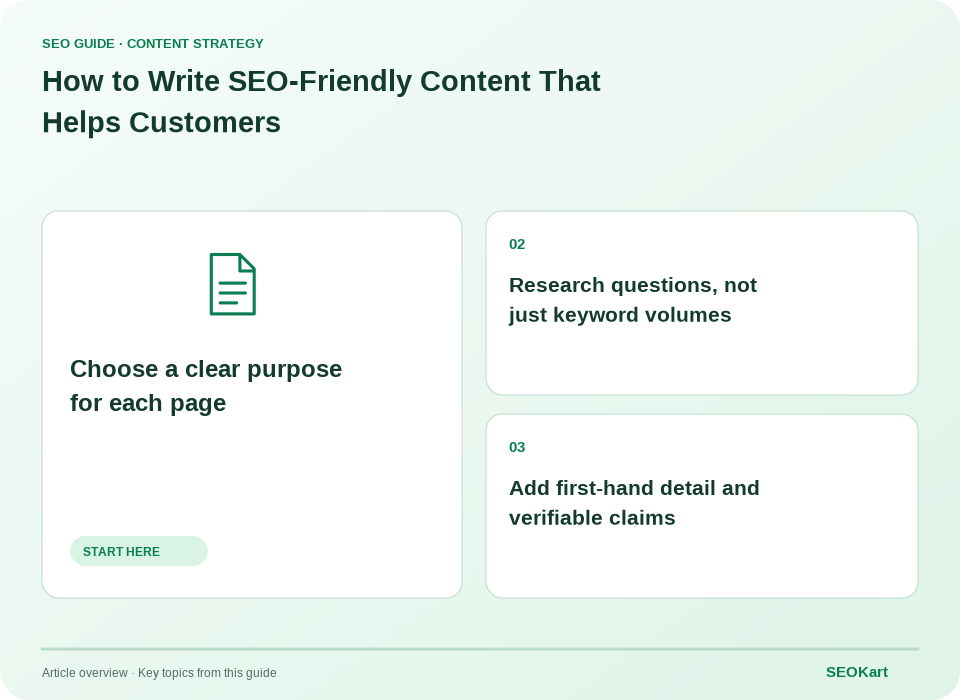
Plan useful SEO content with search intent, original expertise, clear headings, internal links and practical performance checks.
Choose a clear purpose for each page
Before drafting, identify the reader, the query they are likely to use and the action they should be able to take afterward. A service page should help someone evaluate a provider; a how-to article should help someone solve a problem. Mixing unrelated intents often produces vague copy that serves neither audience.
Research questions, not just keyword volumes
Gather questions from customer conversations, search suggestions, sales objections and existing Search Console data. Select one primary topic and a small set of closely related questions. Avoid assigning multiple pages to essentially the same query unless their purpose is genuinely different. For more detail on this related topic, see WordPress SEO: What Helps Rankings and What Does Not.
Add first-hand detail and verifiable claims
Explain your process, show examples from real work when permission allows and distinguish evidence from opinion. Use precise language instead of promises such as guaranteed first-page rankings. Check dates, statistics and product capabilities before publishing; cite authoritative sources when factual claims need support.
Write the answer first and organise the rest
Use one descriptive H1, a useful introduction and H2 sections that follow the reader’s decision process. Keep paragraphs readable and headings specific. Add a checklist or comparison only where it clarifies the information. An FAQ should answer genuine follow-up questions rather than repeat the article. For more detail on this related topic, see Internal Linking for SEO: Building Useful Content Hubs.
Make the page easy to discover and use
Write a distinct title tag and meta description that accurately describe the page. Use a clean URL, descriptive image alt text where relevant, and internal links to the most helpful next resource. For a business evaluating its website, a professional SEO audit can reveal technical issues that content editing alone will not fix. Start with our SEO keyword research guide to map primary queries and related questions to the right page.
Improve content using evidence
After publication, check which queries generate impressions and whether the page attracts the intended visitors. Improve missing explanations, outdated examples, weak calls to action and confusing navigation. Updating useful pages is often more effective than publishing near-duplicate articles every week.