AI search has changed discovery, but crawlable pages, useful answers and credible brands still matter. Learn how to adapt SEO without chasing hype.
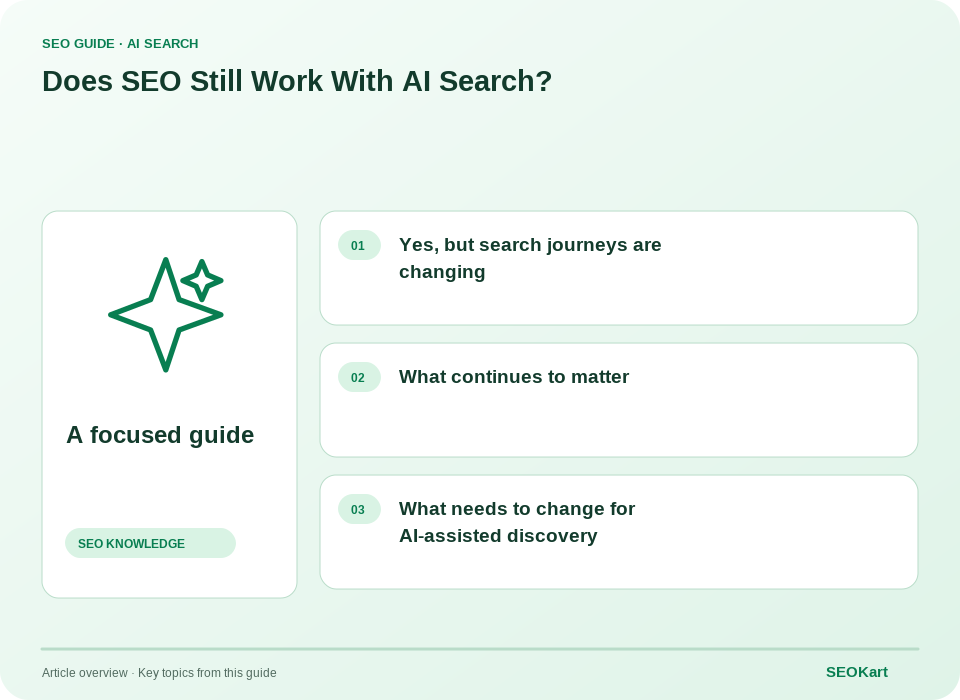
Yes, but search journeys are changing
People still use Google to compare services, find local providers and research purchases. They also ask questions in AI-powered search experiences, which may summarise sources or answer without a click. That makes search visibility broader than traditional rankings, while also making clicks less predictable for some informational queries.
What continues to matter
Search engines still need accessible, indexable pages with clear topics and useful information. Service pages should explain who the service is for, the scope of work, deliverables, pricing where appropriate and a clear next step. Strong internal links help visitors and crawlers find related content. Trust comes from accurate claims, real expertise and consistent business information—not keyword repetition. For more detail on this related topic, see How to Optimise Your Website for AI Search Engines.
What needs to change for AI-assisted discovery
Write direct answers to real questions and support them with enough context to be reliable. Make brands, services, locations and expertise easy to identify. Use appropriate structured data when it reflects visible content. There is no reliable method to guarantee a citation or placement in an AI-generated answer; avoid agencies promising one.
Why publishing more pages is not always better
Hundreds of indexed pages can still generate few impressions when their topics do not match demand, their content overlaps or competitors better satisfy intent. Consolidate near-duplicates where useful, strengthen important commercial pages and avoid mass-producing city or industry pages that merely swap place names.
What to measure now
Track non-branded Google Search impressions and clicks, rankings for priority services, qualified enquiries and organic conversions. Where possible, monitor referral traffic and brand discovery from AI experiences, while recognising attribution limitations. Evaluate the pages that drive customer decisions rather than celebrating index counts alone. For more detail on this related topic, see How AI Search Is Changing SEO in 2026: What Businesses Should Do.
An actionable 30-day plan
Week one: check Search Console and index coverage. Week two: improve the top five commercial pages and their internal links. Week three: publish or refresh supporting answers to actual customer questions. Week four: review query changes, contact-form conversions and crawl status, then prioritise the next set of fixes.
Build a search strategy that serves customers
SEOKart combines technical SEO, content strategy and AI SEO services to improve discoverability without promising guaranteed placements. Talk to us about your website and target market.