Understand how AI answers affect organic discovery, what remains important for Google SEO, and how to measure useful search visibility.
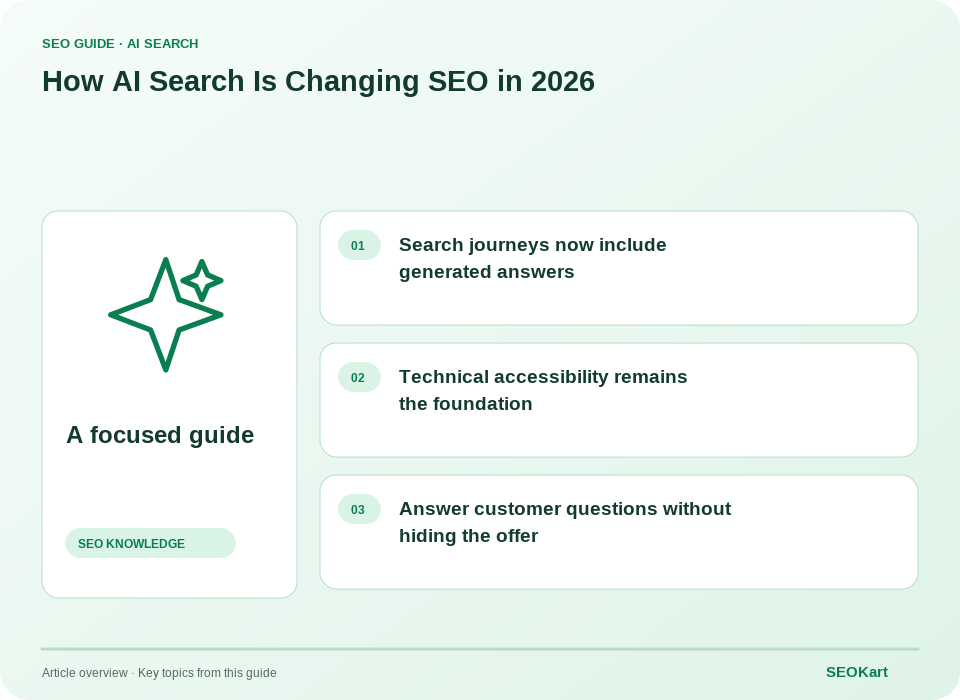
Search journeys now include generated answers
People may see an AI-generated summary before visiting a website, compare several sources in a conversational tool, or still use traditional search results. That means an impression or ranking alone cannot describe the whole customer journey. Businesses should check whether their information is clear enough to be understood and useful enough to justify a visit.
Technical accessibility remains the foundation
AI-oriented content cannot compensate for pages that search engines cannot fetch or understand. Confirm important service pages return successful responses, use appropriate canonical URLs, are linked from the site and contain meaningful text. Start with the technical SEO checklist for business owners before pursuing new AI-specific tactics.
Answer customer questions without hiding the offer
A good page can define a service, explain who it suits, describe the process and give the next step in plain language. Lead with an accurate answer rather than several paragraphs of promotional introduction. Support it with specifics: deliverables, limitations, examples and evidence. A useful answer should still make it easy for a buyer to request a proposal. For more detail on this related topic, see Does SEO Still Work With AI Search? What Has Changed.
Show who is responsible for the information
Describe relevant experience, identify the business behind the site, and keep contact and policy information easy to find. Attribute original research and check factual claims. Do not add fabricated citations or imply that an AI system endorses the business. The direct-answer content guide shows how to improve clarity without manufacturing authority.
Protect existing organic search demand
Do not abandon local SEO, service pages, internal links or Google Business Profile because AI interfaces are growing. Commercial searches often still lead users to websites, maps and comparison pages. Review which pages attract qualified enquiries, then strengthen their content and navigation. The SEO strategy for Indian businesses provides a practical prioritisation framework.
Measure leads and visibility together
Track organic landing-page traffic, enquiries, branded searches and referral patterns where reporting tools expose them. AI referrals may be incomplete or inconsistently labelled, so avoid promising exact AI citation counts. Use observed customer questions and sales feedback to decide which answers need improvement. Revisit the plan as search interfaces change.