Plan category pages, product information, technical SEO and internal links that support discoverability and sales.
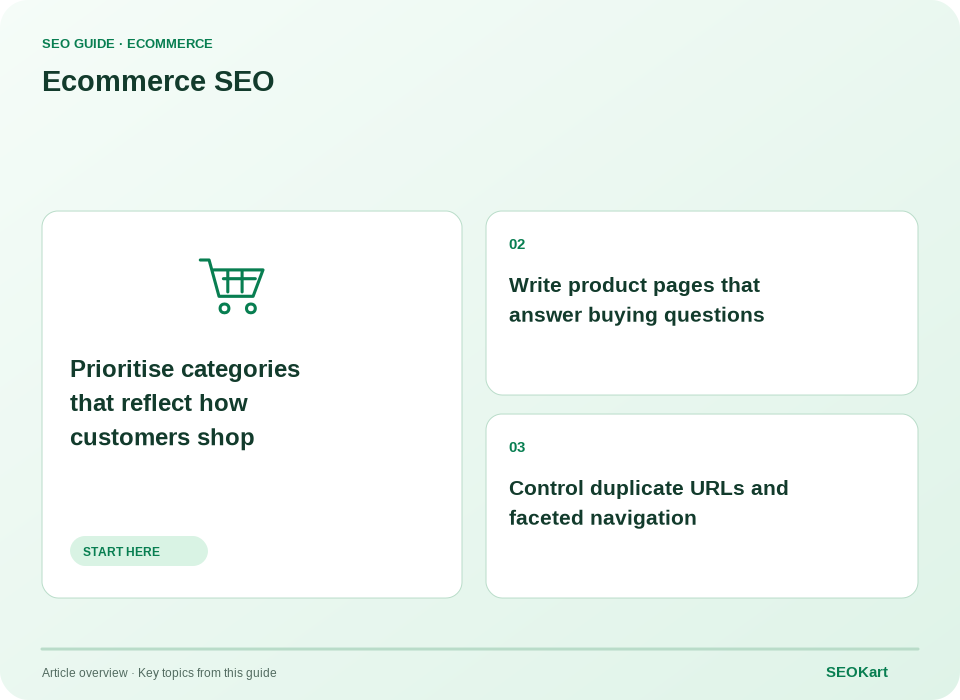
Prioritise categories that reflect how customers shop
Build category pages around real product groups and buying intent. Use clear names, useful introductions and filters that help visitors compare options. Avoid creating indexable pages for every possible keyword or filter combination. Start with categories that have stock, demand and a viable commercial proposition.
Write product pages that answer buying questions
Provide accurate specifications, dimensions, materials, compatibility, availability, shipping and returns information. Original descriptions and meaningful product images help customers evaluate suitability. Do not reuse generic manufacturer copy when important differentiators can be explained more clearly.
Control duplicate URLs and faceted navigation
Sort orders, filters, tracking parameters and product variants can generate many URLs with similar content. Decide which combinations deserve search visibility and which should remain navigational tools. Coordinate canonical tags, internal links and crawl rules. See the faceted navigation guide for deeper implementation checks.
Improve technical reliability across templates
Validate product and category pages on mobile, monitor load performance, and ensure stock or discontinued-item handling is consistent. Use structured data only when it accurately describes visible information. Check that important products are discoverable through HTML links rather than relying solely on site search.
Build buying guides that support decisions
Comparison guides, size advice and product-use explanations can address questions that category pages cannot. Link these articles to appropriate categories and products, not just the homepage. The blog optimisation checklist helps keep informational content useful.
Measure profitable organic sales
Review organic revenue, conversion rate, product margin, returns and new-customer acquisition alongside clicks. A page attracting traffic but no suitable buyers may need a different search intent or product offer. Use the SEO ROI guide to connect performance with business outcomes.