Optimise blog posts with search intent, helpful structure, accurate metadata, internal links and a measurable update process.
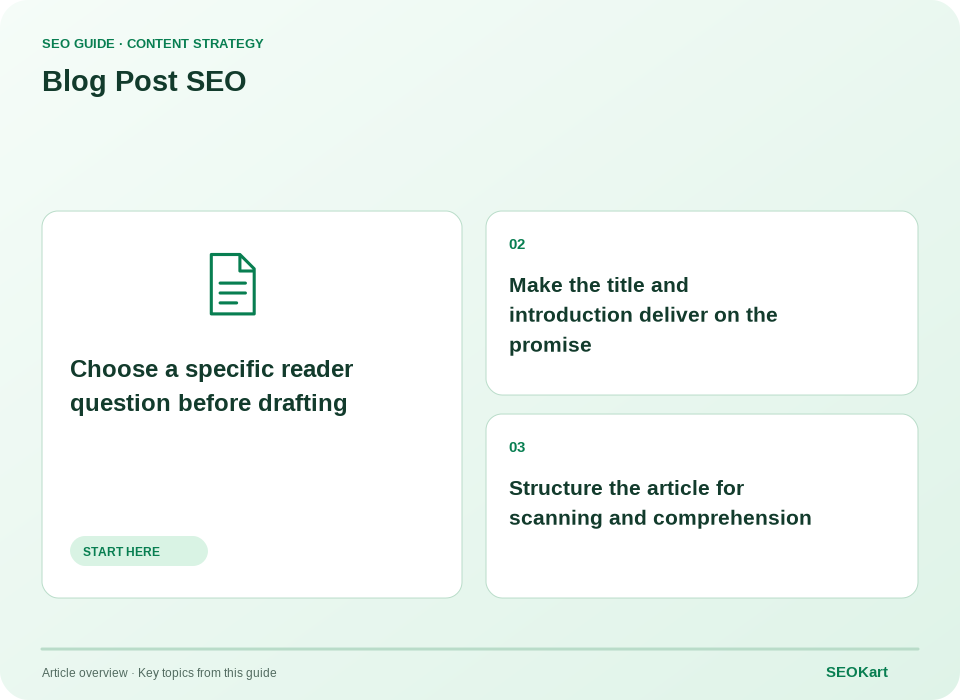
Choose a specific reader question before drafting
A strong blog article should help a defined audience make progress on a problem. Identify whether the searcher wants a definition, comparison, checklist or buying advice. Review the existing search results to understand the likely intent, then choose an angle where your business can offer useful expertise rather than simply rephrasing competing posts.
Make the title and introduction deliver on the promise
Write a specific, natural title and a concise opening that answers the core question. Avoid generic introductions that delay the answer for several paragraphs. Keep the title tag and meta description informative, but remember that Google may display different text in search results. The visible H1 should accurately match what readers will find.
Structure the article for scanning and comprehension
Group ideas under descriptive H2 headings and use H3 only where a section genuinely needs subtopics. Include examples, steps or comparisons where they clarify the answer. Do not stretch a 300-word answer into 2,000 words merely to reach an assumed SEO target. See the guide to SEO content length. For more detail on this related topic, see How Often Should You Update a Website for SEO?.
Link readers to the next useful resource
Add contextual links to closely related explanations and relevant service pages, not a wall of unrelated URLs. Use descriptive anchor text and confirm that destinations load correctly. Link to authoritative external sources when factual claims benefit from verification, while keeping promotional claims grounded in your own evidence.
Improve trust and on-page experience
Check names, dates, pricing and examples before publishing. Compress images appropriately, provide meaningful alternative text where needed and make the article usable on mobile. Avoid intrusive overlays and ensure the content remains readable when scripts fail. For technical priorities, see the website speed checklist.
Refresh posts based on real performance
Use Search Console to review impressions, clicks, queries and page indexing. Look for outdated answers, missing questions and overlap with other posts. Improve or consolidate content where appropriate; do not change a working URL without a good reason. When a URL must change, preserve its value with a permanent redirect and update internal links.