There is no universal schedule for updating every website page. Search engines reward usefulness, not a calendar-driven change to a date stamp. Update content when customer needs, facts, offerings or search intent have meaningfully changed.
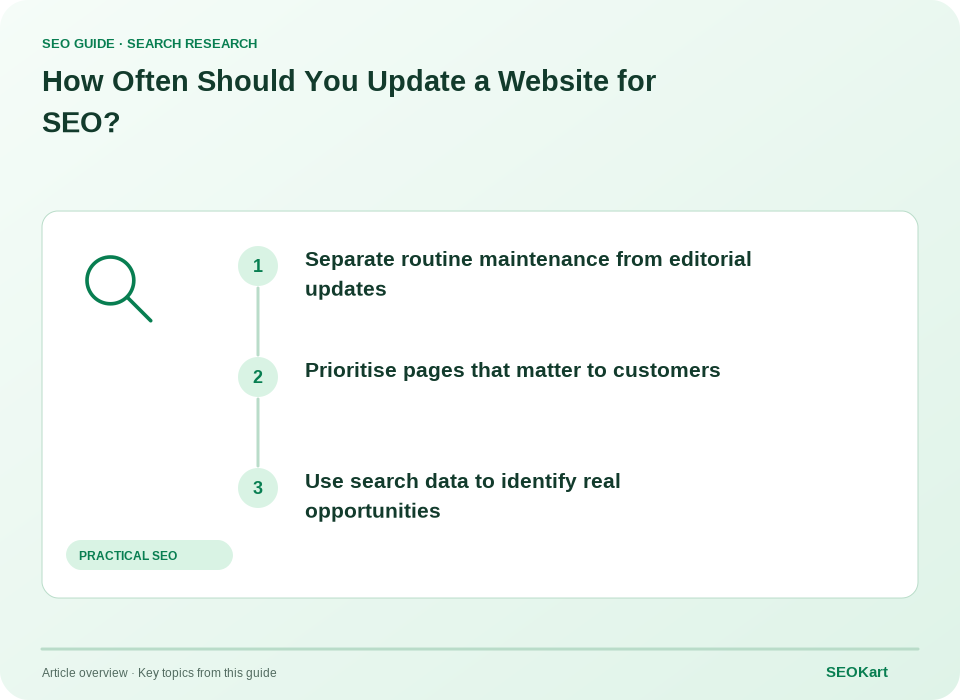
Separate routine maintenance from editorial updates
Security patches, backups, form tests and uptime checks need an operational schedule. Editorial updates are different: a pricing page may change whenever the offer changes, while a timeless explanation can remain accurate for years. Do not rewrite a strong page solely because a month has passed.
Prioritise pages that matter to customers
Review key service, product and contact pages first. Confirm that prices, availability, locations, contact information and promises remain correct. If a page attracts traffic but few enquiries, inspect the offer, mobile layout and call to action. A content refresh should make the page more useful, not simply longer.
Use search data to identify real opportunities
In Search Console, compare queries, impressions, clicks and pages over suitable periods. A drop can reflect demand, ranking changes, seasonality or indexing problems. Investigate the cause before changing copy. Pages earning impressions for questions they barely answer may benefit from clearer sections or a dedicated supporting guide.
Refresh evidence, examples and instructions
Update screenshots when interfaces change, replace obsolete recommendations, correct broken references and add recent first-hand examples where available. Preserve accurate material rather than replacing it with generic AI-written paragraphs. Show an updated date only when a meaningful editorial revision has occurred.
Protect SEO during major revisions
Keep a useful URL when the page still serves the same intent. If a URL must change, use a direct permanent redirect to the closest relevant replacement, update internal links and check canonical tags and the sitemap. Avoid deleting pages with useful links or search demand without assessing an appropriate destination. See our migration checklist and canonical guide.
Adopt a practical review cadence
Check critical business information whenever it changes; review priority pages and performance monthly or quarterly, depending on site size. Audit older guides periodically for factual accuracy and broken links. Measure improvements in relevant clicks, enquiries and customer experience. Our content optimisation guide and SEO services can help structure the work.