A city with more businesses does not automatically have a harder local search market. Competition depends on the service searched, neighbourhood, number of credible providers and strength of the results that Google shows. A dentist in South Delhi faces a different set of competitors from a manufacturer serving buyers across Delhi NCR.
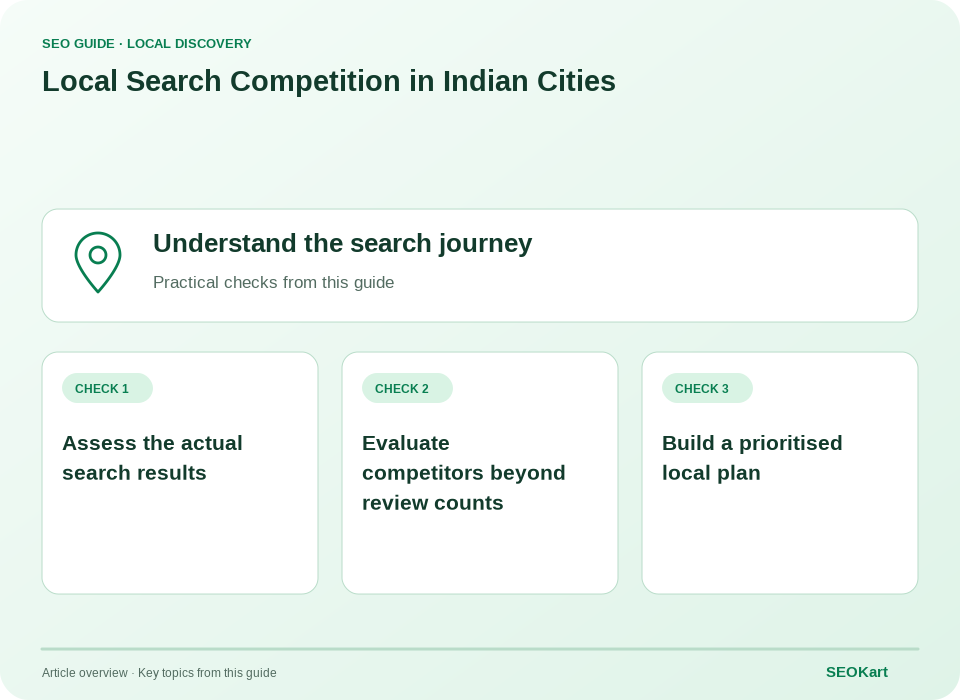
Assess the actual search results
Search for a service and location combination your customers would use. Review the local map results and organic pages separately. Note whether Google favours directories, specialist businesses, national brands or individual location pages. Repeat the exercise for several relevant neighbourhoods rather than relying on a single city-wide keyword.
Evaluate competitors beyond review counts
Review the relevance of their Google Business Profiles, service categories, business information, review quality, location relevance, website content and clarity of enquiry paths. A high review count by itself does not establish why a business ranks. Distance and the searcher’s location can materially change the map results. For more detail on this related topic, see Why Your Business Is Not Ranking in Local Search.
Build a prioritised local plan
Start with accurate business information, a useful service page, a complete profile and a working enquiry process. Then add locally relevant examples, genuine service-area information and supporting content that answers purchase questions. Track calls, forms and qualified enquiries alongside impressions and rankings.
What to avoid
Do not create doorway pages for neighbourhoods where you cannot provide distinct, useful information. Avoid keyword-stuffed business names, fabricated addresses and purchased reviews. Those shortcuts can undermine trust and violate platform policies. For more detail on this related topic, see Local SEO Opportunities Across 10 Indian Cities.
Where to go next
Explore SEOKart services for help building a measurable search strategy, or contact our team to discuss your business goals.