Learn when Hindi and regional-language location pages help Indian businesses, and how to avoid thin translations and duplicate content.
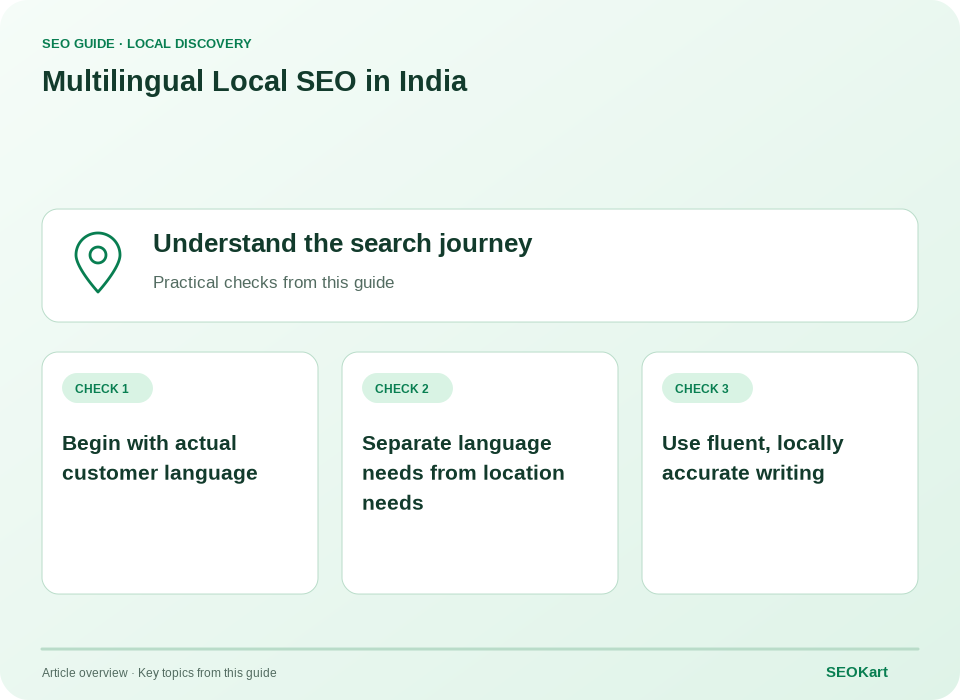
Begin with actual customer language
India is multilingual, but not every market requires a translated landing page. Review the words customers use in calls, enquiries, local searches and support messages. A Hindi page may be valuable for one service area while an English page better serves another. Prioritise demonstrated demand rather than translating the entire website automatically.
Separate language needs from location needs
A regional-language version should serve readers who prefer that language; a city page should explain the services, proof and customer needs of that city. Do not create dozens of city-and-language combinations with identical paragraphs. Start with the markets where a dedicated page adds information customers cannot get from the general service page.
Use fluent, locally accurate writing
Translate meaning, not isolated keywords. Service terms, pricing explanations, contact instructions and trust signals must be understandable to local customers. Have a fluent reviewer check claims and terminology. If a translated page omits critical terms or uses unnatural phrasing, it can reduce enquiries despite attracting impressions. For more detail on this related topic, see Local SEO Citations: Business Listings That Actually Help.
Plan URLs, canonicals and hreflang carefully
Give each substantial language version a stable crawlable URL. Self-referencing canonicals are generally appropriate for distinct language pages; do not canonicalise every translated version to the English original. Where relevant, connect genuine language alternatives with reciprocal hreflang annotations and validate their targets using the hreflang QA checklist.
Keep Google Business Profile information consistent
A multilingual site does not replace accurate business details. Check name, address, hours, service areas and phone numbers wherever the business appears. Link visitors to the correct contact page, and make forms and mobile calls easy to use. The Google Business Profile guide covers enquiry-focused optimisation.
Measure qualified enquiries by language
Track form submissions, calls and sales-qualified enquiries from each language page. Look at whether visitors understand the offer and complete their next step, not just how many keywords appear in a report. Improve useful pages first, and retire thin variants that do not provide a distinct customer experience.