Learn when separate city SEO pages help, what local evidence to include, and how to avoid duplicate location pages across India.
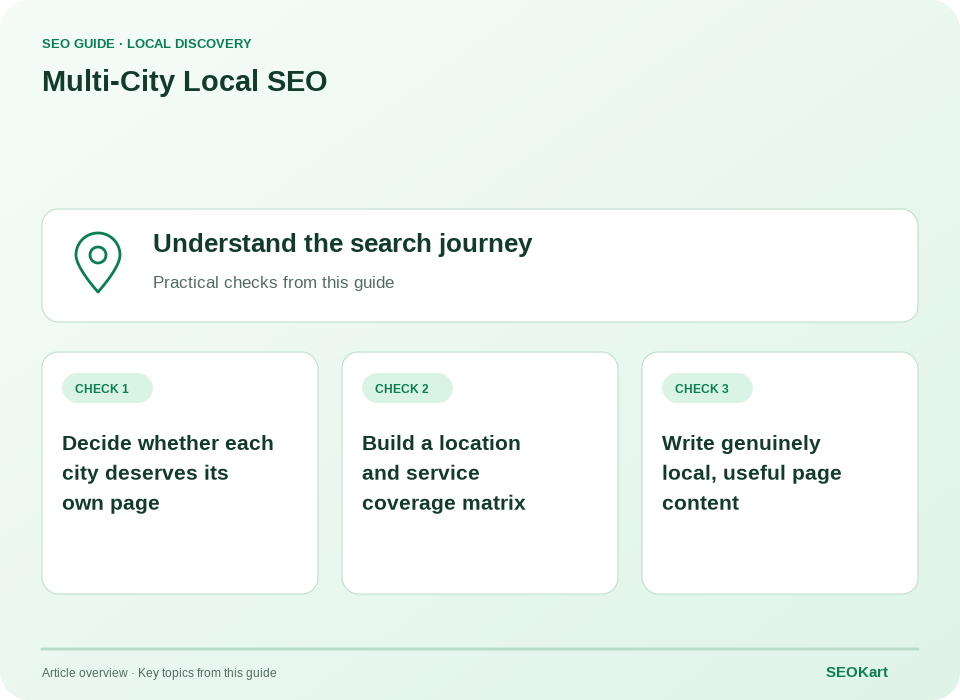
Decide whether each city deserves its own page
A location page should solve a different customer need, not simply repeat a template with a city name swapped. Start with the locations where you genuinely serve customers and can explain the offer accurately. A Delhi-based consultant who works remotely nationwide may need one national service page rather than fifty thin city pages.
Build a location and service coverage matrix
List the cities served, services available, response expectations, relevant teams and proof you can publish. Mark where the offering differs. If two locations have identical information and no meaningful local examples, consider keeping them together. This matrix also helps prevent multiple pages from competing for the same search. For more detail on this related topic, see How to Rank in Multiple Cities Without Duplicate Location Pages.
Write genuinely local, useful page content
Explain the service, who it helps in that market, delivery process, examples and common questions. Add real case studies, project types or service-area details where available. Never invent a local office, customer review or neighbourhood-specific result. A useful city page should still make sense after removing the city name from its title.
Connect city pages to the right service pages
Build clear paths between the main local SEO guide, relevant service pages and city-specific landing pages. Use natural anchors that describe the destination. Avoid stuffing the footer with hundreds of links or linking every location from every paragraph. Navigation should help a buyer find the correct local offering. For more detail on this related topic, see Multilingual Local SEO in India: When Regional Pages Help.
Handle Google Business Profiles accurately
A separate landing page does not automatically justify a separate Google Business Profile. Listings must represent eligible real businesses and comply with Google guidelines. Service-area businesses should set their coverage honestly and avoid fabricated addresses. Check the Google Business Profile lead generation guide for practical improvements.
Measure local outcomes, not just indexed URLs
Monitor impressions and enquiries by city, query and landing page. If location pages receive no relevant visits, audit demand, differentiation, internal links and competition before creating more. Consolidate weak overlapping pages when they serve the same purpose, using a sensible redirect if a URL is retired.