Learn why SEO content length depends on search intent, competition and usefulness—not a fixed word count.
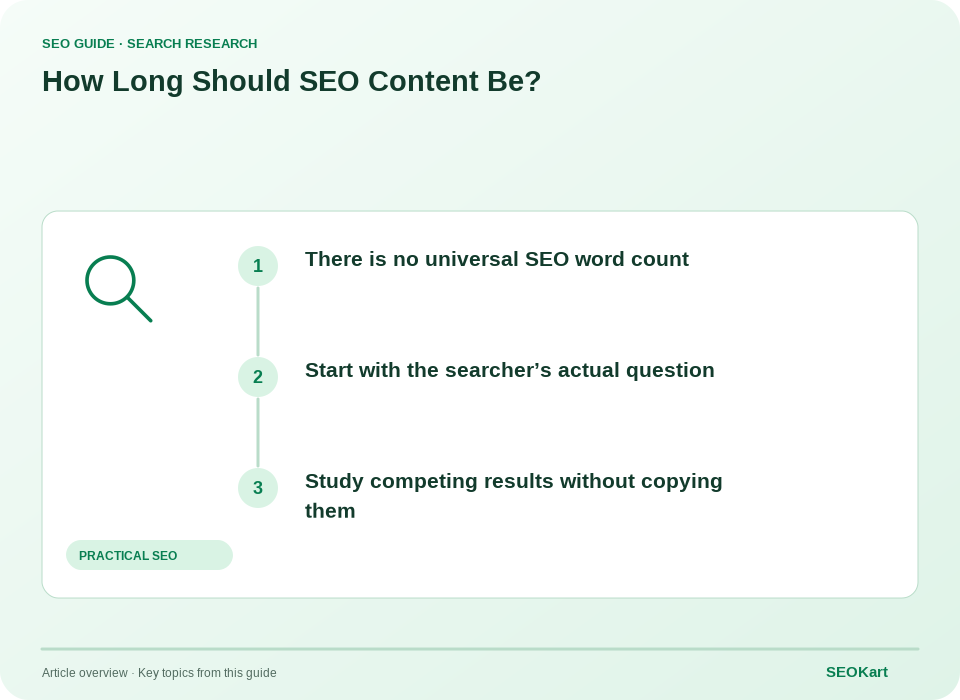
There is no universal SEO word count
Google does not require a minimum number of words for a page to rank. A short service page can answer a narrow question clearly, while a complex buying guide may need much more explanation. The goal is to give visitors enough information to complete the task that brought them to the page, without filler.
Start with the searcher’s actual question
Look at the wording of the query and the decisions a visitor needs to make. Someone searching for an opening time expects a quick answer; someone comparing technical SEO providers may want scope, deliverables, pricing considerations and evidence of expertise. Write an outline around those needs before thinking about length. For more detail on this related topic, see Search Intent in SEO: Match Each Page to the Customer’s Goal.
Study competing results without copying them
Review the formats already satisfying the query: product pages, tutorials, comparison articles or local service pages. Identify missing questions, outdated assumptions and opportunities to add original examples. Do not assume that matching the longest competitor will produce a better result.
Use clear sections and direct answers
Give the main answer early. Add headings for meaningful subtopics, and use examples, tables or steps when they genuinely improve comprehension. Avoid repetitive introductions, generic definitions and location-name substitutions. Strong structure helps readers find answers and makes a page easier to maintain. For more detail on this related topic, see How to Write SEO-Friendly Content That Helps Customers.
Treat commercial and informational pages differently
A commercial SEO services page should explain outcomes, process, credibility and the next step. An educational article may need definitions, caveats and worked examples. Both should link naturally to useful related resources, but neither should be expanded solely to hit a word target. Before setting a word-count target, use our search intent SEO guide to identify the page format and information users actually need.
Measure quality after publication
Review relevant search queries in Search Console, on-page engagement and whether visitors take the intended next step. If readers repeatedly ask unanswered questions, expand the page. If the page repeats itself or hides the answer, shorten it. Reassess the article as products, policies and search behaviour change.