Learn how to build topical authority through useful content clusters, expert coverage, internal links and ongoing updates.
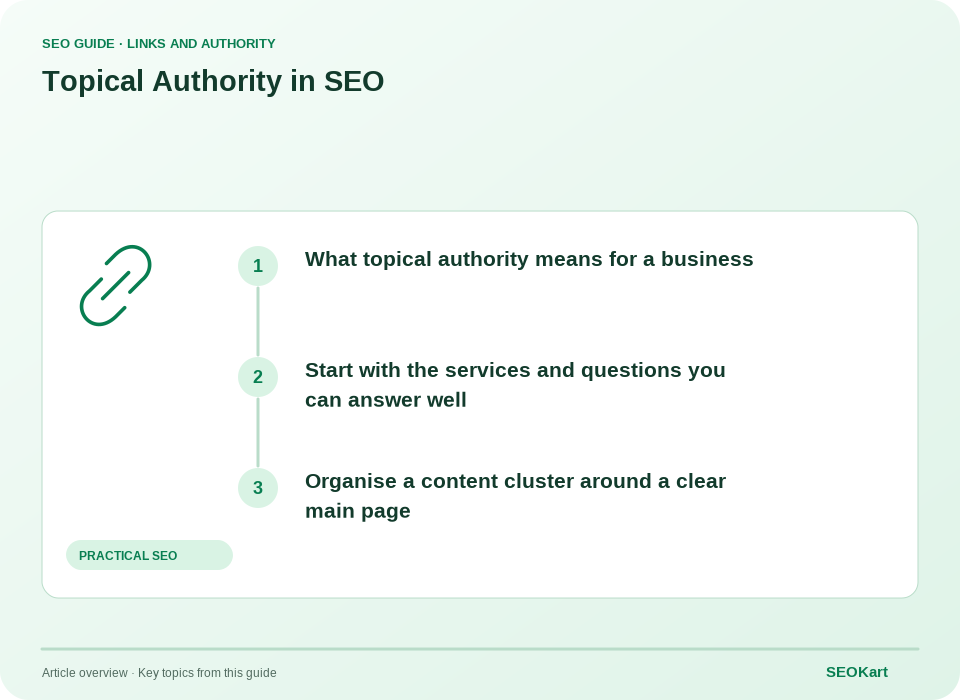
What topical authority means for a business
Topical authority describes the depth, relevance and credibility a website demonstrates across a subject area. It is not a single Google score you can look up. For a business, the practical goal is to become a genuinely helpful source for the questions customers ask before and after they buy.
Start with the services and questions you can answer well
List your main services, the problems they solve and the questions buyers ask. An SEO agency might cover technical audits, local search, content planning and measurement; a hotel might cover room types, accessibility, location and booking policies. Focus on topics where your team has useful knowledge rather than publishing about every trending keyword.
Organise a content cluster around a clear main page
Create a strong service or category page that explains the offering and helps customers act. Support it with articles that answer narrower questions, such as internal linking strategy or content optimisation. Each supporting article should answer a distinct need, not restate the same paragraphs with a new title. For more detail on this related topic, see Why Every Business Needs an SEO Strategy: A Practical Roadmap.
Use internal links to make relationships clear
Link supporting articles to the relevant service page and to related explanations when useful. Choose descriptive anchor text and place links in the paragraph where the reader needs them. A long footer list is not a substitute for contextual navigation. Avoid forcing links onto unrelated pages just to increase counts.
Show evidence and maintain accuracy
Use real examples, clearly explain processes, identify the author where appropriate and review information that changes. Remove unsupported claims and keep pricing, product details and technical guidance current. Strong coverage is built through useful experience and accuracy, not by mass-producing hundreds of shallow pages.
Measure outcomes instead of counting articles
Review Search Console queries, impressions and clicks by topic, then connect visits to qualified enquiries. Look for unanswered questions and pages competing for the same intent. Refresh or consolidate weak material before commissioning another article. For a structured starting point, review SEOKart SEO services and your existing content inventory.